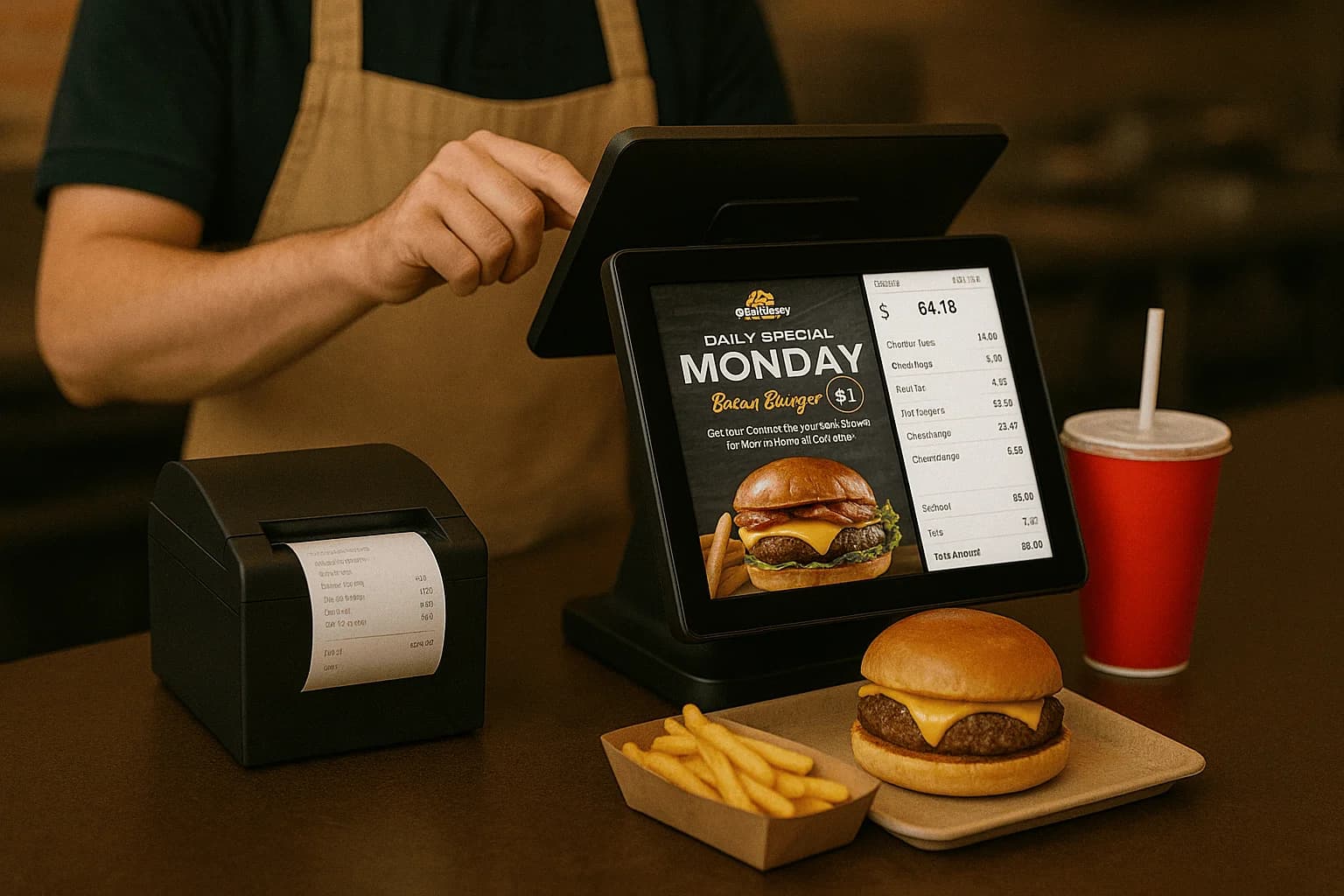
What a restaurant POS handles
A modern restaurant POS like Caviar (a division of Armour Payments) manages orders and menus, pay-at-table, self-order kiosks, online ordering, delivery integrations, gift and loyalty, and reporting. It connects the dining room, the kitchen, and every digital channel. On a Friday, a six-top, a bar ticket, a kiosk combo, and a delivery order should share one menu and one kitchen queue, so an 86 is not retyped at every station. A coursed table can still fire apps, then mains, without a second entry. At close, dine-in, takeout, and delivery belong in one report. See restaurant POS.
Choosing for your service style
The first decision is service model. A counter built on combo buttons will fight a dining room that needs coursing, seat numbers, and split checks, and staff will invent a workaround the first busy night. Write down how guests order this month: dine-in, counter, kiosk, online, delivery. Configure that path before you add hardware. A feature you do not run is a button nobody should have to skip. Our restaurant POS buyer’s guide covers the full evaluation, and QSR vs full-service shows how to configure for speed or for hospitality.
Speeding service and lifting tickets
Turn tables faster with pay-at-table and grow average checks with self-order kiosks. Both reduce labour pressure while improving the guest experience. The slow step on the floor is the walk to a fixed till: the server leaves the section, food sits in the window, and the next party waits. A handheld keeps the close at the table. At the counter, a rushed cashier skips the combo ask. A kiosk asks it every time, in the same order, and both paths should hit one kitchen queue. Keep a staffed register for guests who want a person.
Owning your digital orders
Take orders directly with online ordering without the 30% delivery tax, and bring the marketplaces in cleanly via integrating Uber Eats, DoorDash and Skip. A Tuesday regular should land on your page so the ticket hits the kitchen and you keep a way to reach them. Leave the apps for guests who would not have found you. The failure is a direct menu that is not the line: an item you already 86’d still takes the order, and the remake spends what you saved. Update price and availability once. Put the direct link on the receipt so the next order has a path that is yours.
Loyalty, labour and data
Bring guests back with restaurant gift cards and loyalty, recover the hidden labour cost of slow payments, and use menu engineering with POS data to grow profit. Ask about a gift card before the check drops, and make the balance work at the table and online. If the server leaves to type a phone number into another app, the guest will say to skip the reward. Time the walk to the till if that is where the section stalls. On Monday, sort last week by what sold and what it cost, and change one item. Golf operators should see golf course F&B. Book a demo to see Caviar live.
A Friday dinner rush on one ticket path
Picture a Friday at 7:15. The host seats a six-top, two guests order at the bar, a kiosk ticket prints for takeout, and a delivery order lands while the patio is still turning. On separate tools, the host, the bar, and the expo each keep a different list, and an 86 on the special has to be repeated at every station. On Caviar, those orders share one menu and one kitchen queue. The six-top can fire apps, then mains, without a second entry. The kiosk combo and the delivery ticket show the same sold-out item. At close, dine-in, takeout, and delivery sit in one report instead of three exports. That is the job of a restaurant POS: one path from the first order to the last card tap, including in-person payments at the table or the counter.
Patio season and the January dining room
When the patio opens, the same menu suddenly has a second service style: faster drinks, shared plates, and a line at the host stand that the dining room never sees in March. A POS that only knows a numbered indoor table pushes the patio back onto a paper pad. Give the patio its own section with the same items and modifiers, and close checks with pay-at-table so a server is not walking inside for every card. In January the useful move is the opposite. Look at which patio-only modifiers died with the weather and which dine-in plates still move on a Tuesday. Gift cards and loyalty are the practical bridge, because a December card comes back when covers are thin. Caviar keeps both seasons on one menu, so you are not rebuilding the button layout every time the weather changes.