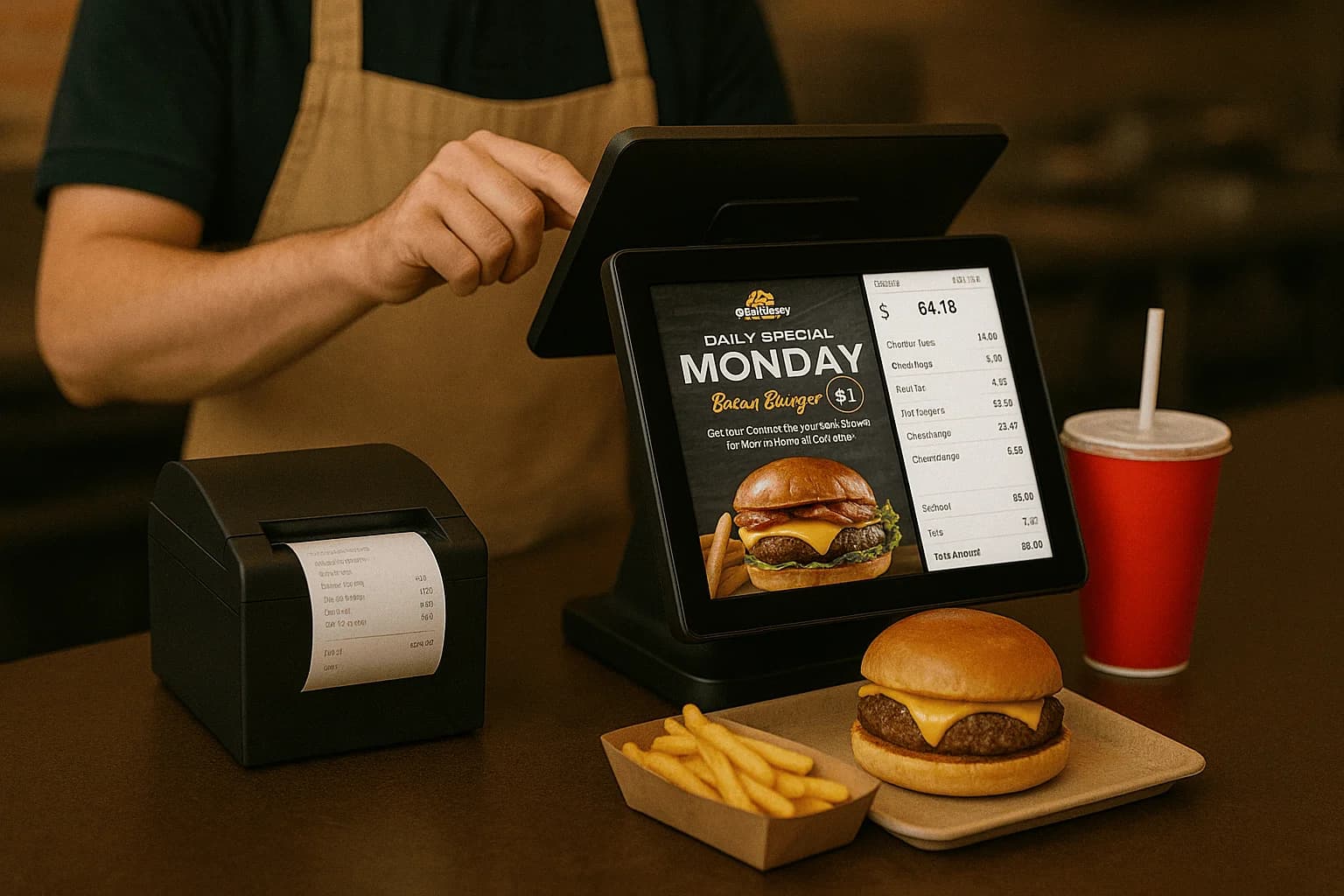
Why kiosks grow tickets
A kiosk asks every guest, every time: "Make it a combo? Add a side? A dessert?" It never gets busy, embarrassed, or forgetful. Those consistent prompts are why operators commonly see double-digit increases in average ticket size. A cashier under a lunch rush skips the ask. The screen does not. Keep the prompts in the same order, and watch which ones guests skip so you can shorten that screen the same week. If the add-on sits three taps deep, people abandon it. The kitchen still has to read one ticket, with the modifiers the guest actually chose, not a verbal order restated at the pass. Canadian restaurant owners get that consistency from self order kiosks, which ask the combo even when the lunch line is stacked.
Less line, more throughput
Kiosks parallelize ordering so guests are not stuck behind one cashier. During rushes this clears lines faster and reduces walkouts, especially at lunch when speed wins the sale. The guest who wants a swap and a question about the combo holds everyone behind them. A kiosk lane only helps if the screen is faster than a cashier. Place it where people see it before they commit to the cashier. If the kiosk does not share the 86 list with the counter, guests order an item you cannot make and rejoin the line you hoped to shorten. Send both paths to the same kitchen display.
Redeploy your labour
Kiosks do not replace your team. They free it. Staff move from taking orders to making food and running it out, which improves speed and quality where it matters. The failure is a wall of screens and nobody at the pass. On a Saturday family rush, someone still has to help the first confused order and get the bag to the pickup shelf. Keep one staffed register for guests who want a person, and move the extra person to the window. If the team is still lined up at the cashier because the kiosk is hard to finish, you have not redeployed anyone. You have added a second line.
Rolling them out
Start with one or two kiosks alongside a staffed counter, keep the menu tap-friendly, and connect kiosks to your restaurant POS and kitchen display. Book a demo to see Caviar kiosks. Click through the screen the way a Saturday guest would, including the upsell you want asked every time. Confirm an 86 on the counter is an 86 on the kiosk in the same minute. If modifiers are buried, fix the buttons before you coach staff to apologize for the wait. Watch the first week of skipped prompts and shorten those screens. A kiosk that is not on the kitchen display will be re-typed at the expo.
The lunch line versus the kiosk lane
At lunch, the cashier line is one conversation wide. A guest who wants no onion, a swap, and a question about the combo holds everyone behind them. A kiosk lane is several orders wide. Each screen asks the combo, the side, and the add-on in the same order, including the guest who would have waved off a cashier. The kitchen should still see one queue. Keep one staffed register for people who want a person, and place the kiosk where the line can see it before they commit to the cashier. If modifiers sit three taps deep, you have rebuilt the slow conversation in glass. Tie the screen to the restaurant POS and the kitchen display so an 86 on the counter is an 86 on the kiosk in the same minute.
A Saturday family order at the counter
Saturday late morning is a different crowd than the weekday regular who already knows the combo number. Families stand together, kids change the order twice, and the cashier ends up re-reading a ticket that was never rung the way the group meant. A kiosk lets that group build the order on the screen, see the modifiers, and pay before they reach the pickup shelf. Staff move to the pass, where Saturday actually falls apart when everyone is stuck at the register. Start with one kiosk beside the staffed counter, not a wall of screens and nobody to help the first confused guest. Watch which prompts get skipped and shorten those screens the same week. Book a demo and click through a Caviar kiosk the way a Saturday guest would, including the upsell you want asked every time.