Where the time leaks
Count the steps in a slow payment: print the bill, walk to the till, run the card, wait for authorization, walk back, capture a signature. Multiply by the covers in a section and the lost minutes become lost labour hours. Each check feels short, so the leak is easy to miss. On a Saturday the walks stack. The server leaves as the kitchen calls a pickup, waits behind someone else, and a decline sends them back. Write the steps down for one real check before you argue about staffing. If the till is where the section stalls, another person on the floor will not give those minutes back. Canadian restaurant general managers can name that slow payment labor cost by timing one real check before they add staff.
Put a number on it
Estimate the extra minutes per check from a slow flow, multiply by checks per week and your loaded labour rate. Most operators are surprised how much paid time disappears into avoidable payment friction. You do not need a formal study. On one Saturday, time a few checks in the same section with a phone. Start when the guest asks for the bill. Stop when the table can be reset. Note the walk, the wait behind another server, and the authorization. Then multiply. You are looking for whether the till is the stall. If you cannot point at a step, a new terminal will keep the same walk.
Speed recovers margin
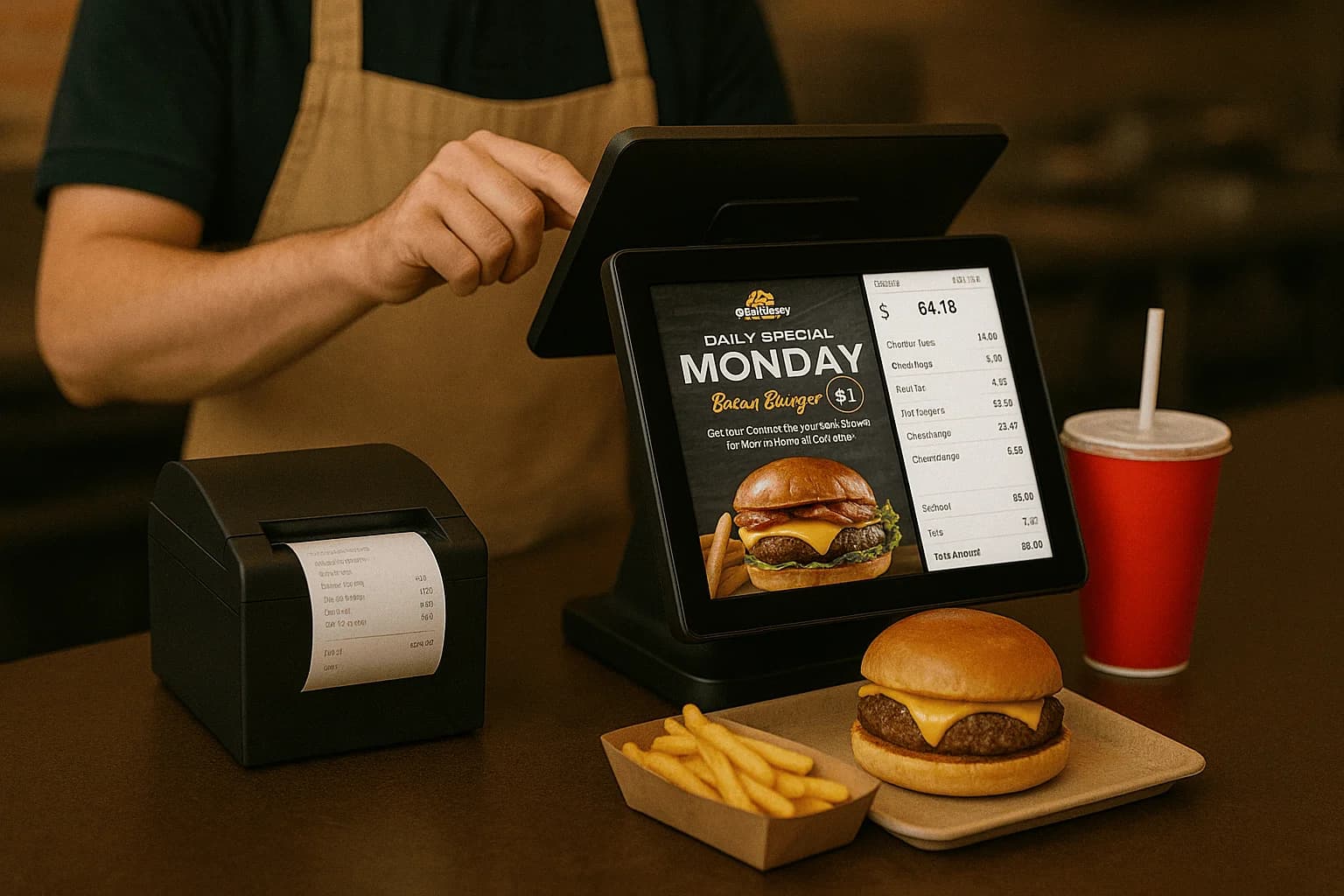
Faster authorization and pay-at-table cut those steps to seconds. Servers cover more tables, the kitchen keeps pace, and you reclaim hours without adding headcount. The guest taps while the server can still answer a question about the bill, and a decline is handled before anyone stands up. Tips go on the screen instead of a blank line that gets rushed. The handheld has to stay charged and reach the back corner. If the device is slower than the till, or it lives behind the bar, you moved the wait. Compare the two flows on a quiet shift, same section and same server, before you judge them on a Saturday.
Make payments fast
Use modern terminals and a POS built for speed. See restaurant POS and next-day deposits for cash-flow speed too. Book a demo to time it yourself. Bring a check from a real section and run it tableside, including a tip prompt and a decline handled at the table. Time that against the walk to your current till. Confirm the payment, the tip, and the table status land in the same close. Ask what happens in the far corner if the network drops, and whether the card can queue. A faster tap is not the same thing as a faster deposit.
Timing three checks with a phone
Pick one Saturday and time a single check with a phone, not a feeling. Start when the guest asks for the bill. Stop when the table is free to reset. Write down the walk to the till, the wait behind another server, the authorization, and the walk back. Do it for three checks in the same section so one long conversation does not set the whole story. Then multiply the extra minutes by the checks that section handles. You need to see whether the till, not the greeting, is where the section stalls. The usual fix is fewer steps: pay-at-table and a terminal that authorizes quickly, including Interac tap. Book a demo and time the tableside flow before you redraw the section.
The same section, two places to take the card
Keep the section, the menu, and the server the same. Change only where the card is captured. At a fixed till, payment takes the server out of sight. A decline means another lap. At the table, the guest taps while the server can still answer a question about the bill, and a decline is handled before anyone stands up. Tips go on the screen instead of a blank line that gets rushed. You need a handheld that stays charged and on a network that reaches the back corner. If the device is slower than the till, you have moved the wait. Compare the two on a Tuesday before you judge them on a Saturday. See restaurant POS.