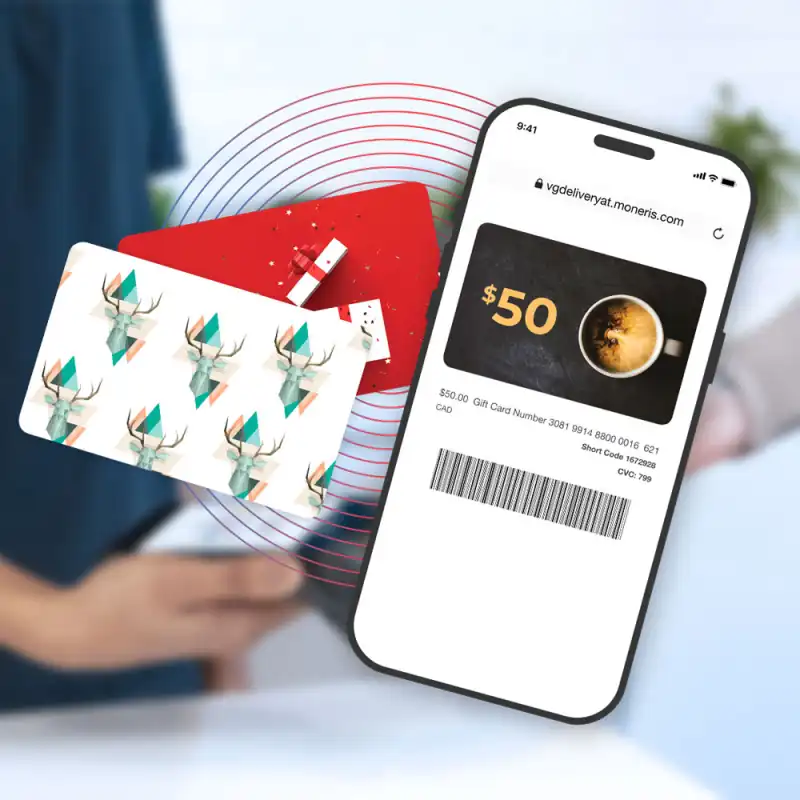
Gift cards: cash now, customers later
When someone buys a gift card, you get paid immediately for a sale you fulfil later, which helps cash flow. The recipient is often a new customer who frequently spends more than the card value. On a Saturday the till sees both halves: one guest buying a card, and the next redeeming one and putting the rest on their own tap. Sell the new card as a normal item. When the recipient returns, show what is left and take the remainder on the same checkout. A balance that works at only one till, or only in the store, is a card people stop coming back to use. Canadian retail owners run retail gift cards and loyalty in a retail POS so the balance works on the same till the guest is already using.
Loyalty: the repeat-visit engine
Loyalty programs give customers a reason to come back to you instead of a competitor. Even simple points or rewards measurably increase visit frequency and average spend, and they generate the data to market smarter. A small store does not need a complicated set of tiers. Points, or a simple visit reward, are enough if a part-timer can apply them on a Saturday. The program fails when the associate remembers it after the guest has paid, and the fix is a handwritten note. Next visit, the guest does not bother. Check the following week whether redemptions happened on a quiet day, not only when you were already lined up.
Why integration matters
Run gift and loyalty inside your POS so balances, redemptions, and points work seamlessly at checkout and online. A bolt-on tool that does not sync creates errors and friction. See the deep dive in our gift cards and loyalty guide. The lookup, the reward, and the payment need to be one screen, in that order, before the tender. A second app drifts from the customer the POS already knows, and a card sold online will not show at the counter. If any step needs a manager or a binder, guests learn the friction faster than staff learn the workaround. The next visit, they will not mention it.
Getting started
Armour Payments offers gift card and gift + loyalty programs from $35/month. Launch in days, not months. See pricing or book a demo. Live means a Saturday part-timer can sell a card and redeem one without leaving the till, and the same balance works if you also sell online. Before you announce it, run that path yourself. Confirm the remainder can be paid on the same checkout, and that a reward applies before the tender, not after. If the first redemption needs a code nobody shared with the person on the register, you are not launched.
Two gift-card guests, one Saturday till
A Saturday gift-card sale at a boutique is two transactions pretending to be one. The buyer wants a card for someone else. The person behind them wants to redeem a card and put the rest on their own tap. If gift cards live in a binder, the associate leaves the till, and the line feels the pause. In the POS, sell the new card as a normal item, take payment, and hand over a balance the recipient can use later in the store or online. When the recipient comes back, the redemption shows what is left and takes the remainder on the same checkout. Recipients often spend more than the card value when the remainder is easy to pay. Armour Payments offers gift and gift + loyalty from $35/month. See pricing and the gift cards and loyalty guide.
Rewards the part-timer cannot apply
Rewards that only work on one till train customers to stop mentioning them. They paid on the pad, the associate remembered the points program afterward, and the fix was a handwritten note. Next visit, the guest does not bother. The lookup, the reward, and the payment need to be one screen, in that order, before you hit the tender. A small store does not need a complicated tier chart. Points, or a simple visit reward, are enough if they actually apply on Saturday when a part-timer is on the register. Check the next week whether those redemptions happened on a quiet day, not only on a day you were already lined up. A bolt-on app that does not share the customer with the POS will drift. Book a demo and redeem a test reward as the associate.