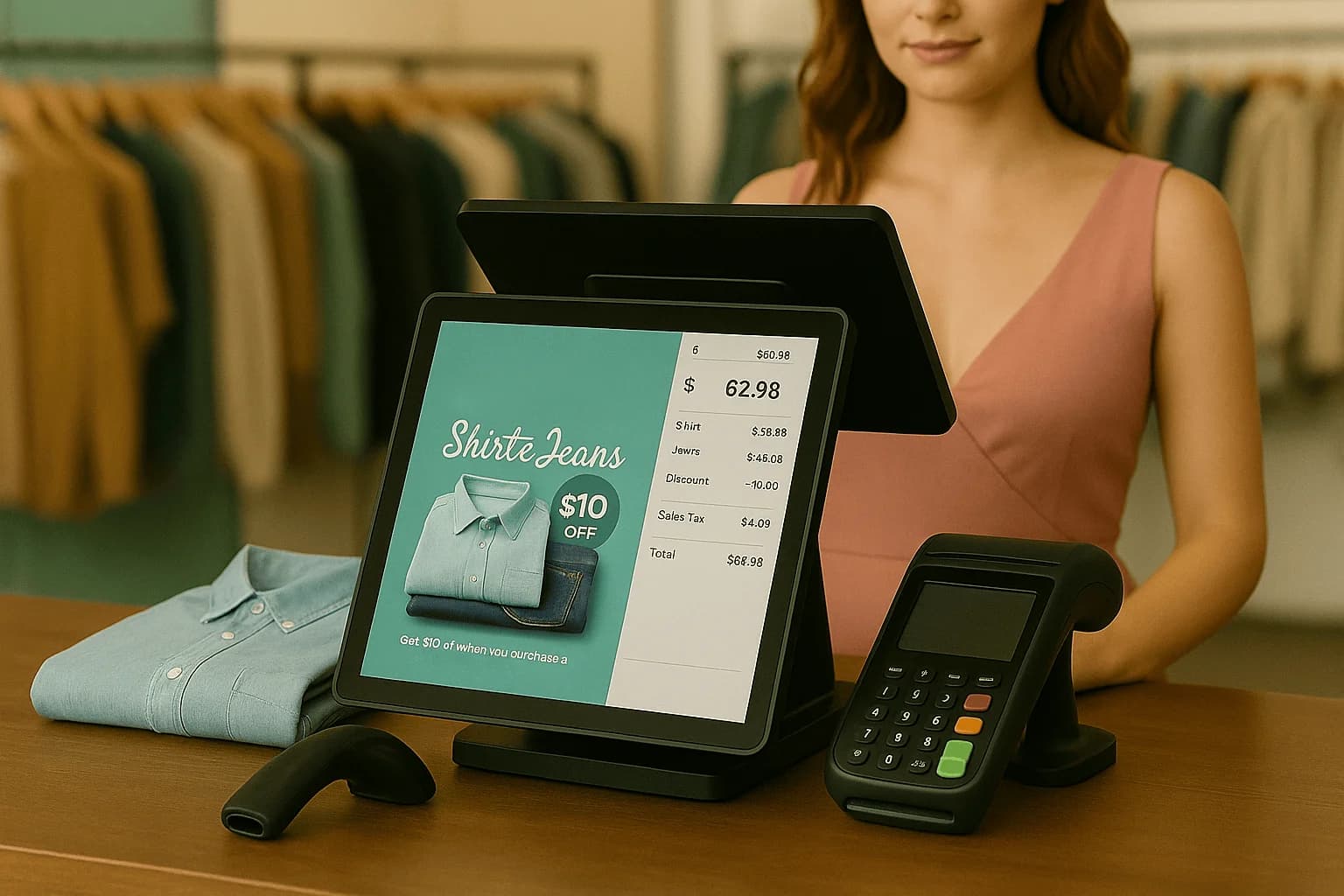
Slow lines cost real money
When the line is long, customers abandon baskets or skip the impulse buy. Some walk out entirely. Every second at the till has a price, especially at peak hours when your highest-intent buyers are waiting. Watch one basket from the moment the guest reaches the till until the receipt is in their hand. The person behind them puts something back during a name search, a barcode the scanner misses, or a total read aloud and typed into a second pad. Stand at the lane and count the pauses. The item beside the till only sells if the associate can mention it without holding everyone. Canadian store managers protect a faster checkout average basket size when the associate can make that mention without holding the line.
Where the seconds go
Most checkout delay comes from manual entry, totals re-keyed into a separate terminal, and slow payment authorization. An integrated PIN pad and barcode scanning remove the biggest bottlenecks instantly. The POS already knows the amount. When the pad asks for it again, the associate mis-keys, the guest questions the number, and you void and start over. That loop is longer than the tap. A scanner left in the box turns every item into a name search, and generic buttons mean on-hand stops matching the shelf. Tap should finish most sales with the card in the guest’s hand.
Speed creates upsell room
A faster line is not only about throughput. It frees your staff to recommend add-ons, mention loyalty, and offer gift cards. That attention is where gift cards and loyalty and bigger baskets come from. The mention has to happen while the basket is still open, not after the guest has paid and the next person is unloading. An associate who is re-typing a total will not point at the item beside the till. A loyalty lookup in another app gets skipped for the same reason. Shorten the tender first. Then the person on the register has a moment for one question: the add-on, the reward, or a gift card.
Tune your checkout
Enable tap and saved cards, place impulse items near the till, and keep the payment step frictionless. See how it ties together on retail POS or book a demo. On a quieter day, time the same items with the same associate, once while the total is typed into a separate pad and once on an integrated pad. You are looking for the re-key and the void that follows a wrong amount. If the faster buttons are unclear, people will avoid them and the busy day will feel the same. Run a real basket, then a return, on the integrated flow before you change the floor.
Follow one basket through the Saturday line
Watch one basket on a Saturday line, from the moment the guest arrives at the till to the moment the receipt is in their hand. Count the pauses. Searching an item by name. Turning the barcode toward the scanner twice. Reading the total out loud and typing it into a separate pad. Waiting on a chip insert when tap would have finished. Each pause is a chance for the person behind them to put something back, or to leave. An integrated pad and a working scanner remove the two longest pauses. With the line moving, the associate can point at the item by the till without holding everyone up. That is the basket lift: time you got back. See retail POS and keep in-person payments integrated so the total is not typed again.
Ten sales typed, ten sales integrated
Typing the total into a second device feels minor until you watch a line. The POS already knows the amount. The pad asks for it again, the associate mis-keys, the guest questions the number, and you void and start over. An integrated PIN pad receives the total and shows it to the guest. Tap, including Interac, finishes most sales without the card leaving their hand. The comparison to run on a Tuesday is simple. Time ten sales on the split setup and ten on the integrated pad, same items, same associate. You are looking for the re-key and the decline loop, not for a lab result. If staff avoid the faster tender because the buttons are unclear, the line will not feel it. Book a demo and run a real basket, then a return, on the integrated flow.