Apparel and fashion
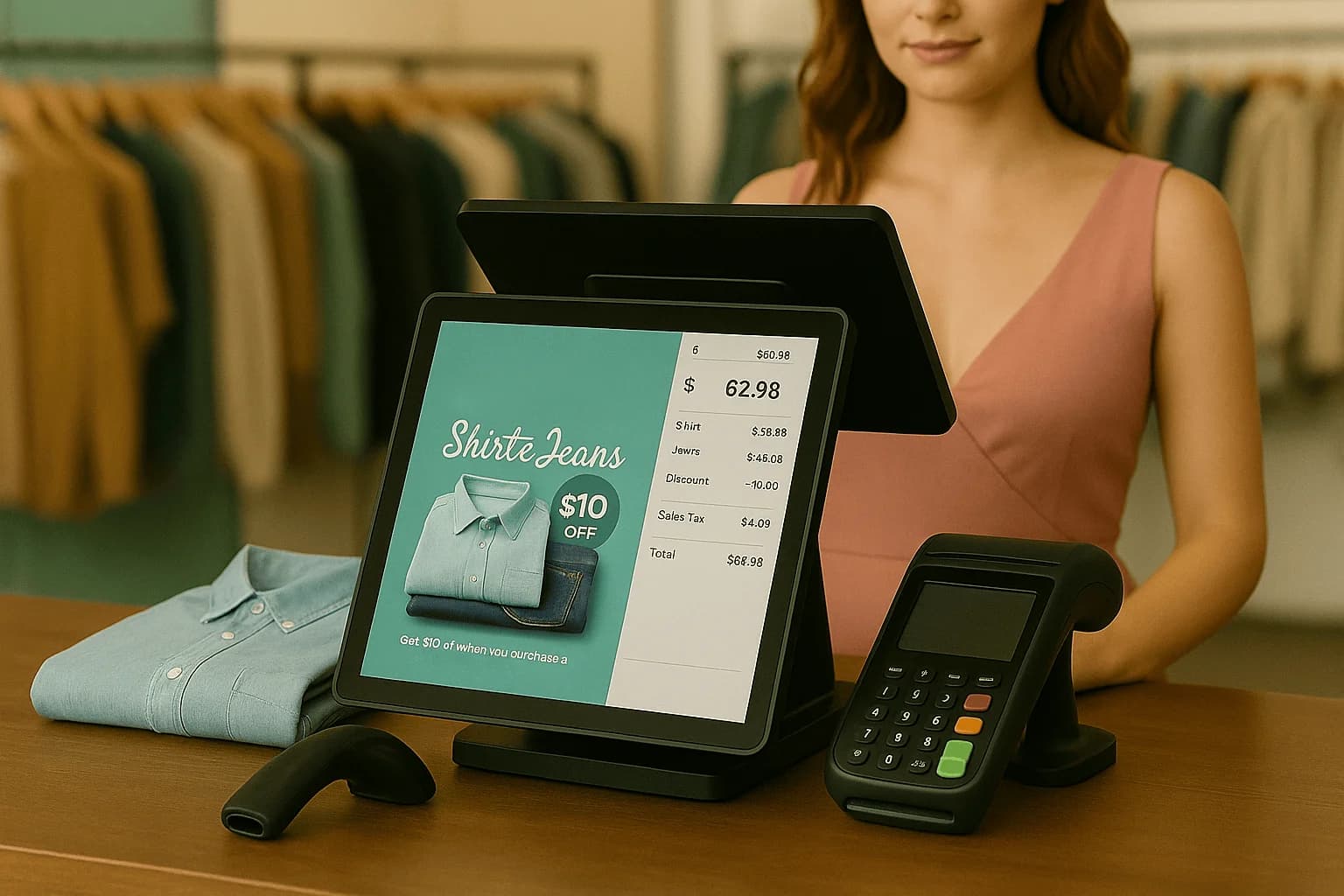
Apparel lives on variants: size, colour, and style. You need matrix inventory, easy variant creation, and reporting that shows which size sells out first. Look for strong product-variant handling and quick restock workflows. The failure is a new colour added as a brand-new product. You can see that something sold, and not that the style sold while that colour did not. Reorder the cell that hit zero, not a fresh item with a slightly different name. If the size is gone here and sitting in another store, the screen should show that before you promise a transfer. A flat product list puts the size chart back beside the register. Canadian retail owners need a POS for retail niche that stores size, colour, and style on one matrix, so the size chart stays on the screen.
Grocery and convenience
Grocery demands speed and weighted items: fast barcode scanning, integrated scales, and an integrated PIN pad for high-volume lanes. Tax handling for mixed baskets and age checks for restricted items matter too. A weighted item rung as a flat button is the common miss. Scan, put the item on the scale when it is sold that way, and mix taxable and non-taxable lines without a manual tax change on every basket. Put the age check on the restricted item, not in the cashier’s memory. If the pad makes you re-type the total, the scale work was wasted because the line stalls at the last step.
Specialty and service-led retail
Specialty stores often need serial-number tracking, warranties, repairs, or appointment booking alongside sales. Match these to POS modules so the system supports the whole operation, not just the till. The guest buys the item and books a repair on the same visit. If the register stores only the item code, the serial number ends up on a paper tag you throw out, and the appointment sits in a calendar that does not know what was paid. The sale, the serial or warranty note, and the next appointment belong on one record. A module you leave off is the same as a notebook.
One platform, many niches
A flexible retail POS adapts to your category instead of forcing you into a generic flow. See how Armour Payments fits your store on retail POS, or book a demo for a tailored walkthrough. Bring one exception from the niche you run. Apparel: a style in two colours and a size that is gone. Grocery: a weighted item in a mixed-tax basket. Specialty: a sale that must remember a serial number and a repair. If the demo can only ring a generic button, the notebook returns beside the till. Configure the path for the room you are in, and walk it on the real screen.
Three niches, three different ring-up buttons
Three niches can each say "ring this up" and mean a different button. Apparel means a matrix: this style, this colour, this size, so you reorder the cell that hit zero. Grocery means speed and weight. Scan, place the item on a scale if it is sold that way, mix taxable and non-taxable lines without a manual tax override, and keep the lane moving with an integrated PIN pad. Age checks belong on the restricted item. Specialty is often one physical unit with a history. A serial number or a repair note has to hang off the sale or you will not find the item when the guest comes back. Forcing a grocer onto an apparel matrix, or a clothier onto a scale screen, is how notebooks return. Pick the path for the niche you run.
The SKU that forgot the repair
A specialty counter often sells a product and then a service on the same visit. The guest buys the item, then books a repair or a fitting, and the old register stores only the SKU. They come back, and the serial number was on a paper tag you already threw out. The POS needs the sale, the serial or warranty note, and the next appointment in one record, or the service half of the business stays in a calendar that does not know what was paid. Apparel’s version is a new colour added as a brand-new product, so you cannot see that the style sold and the colour did not. Grocery’s version is a weighted item rung as a flat button. Book a demo on retail POS with one real exception from your niche.