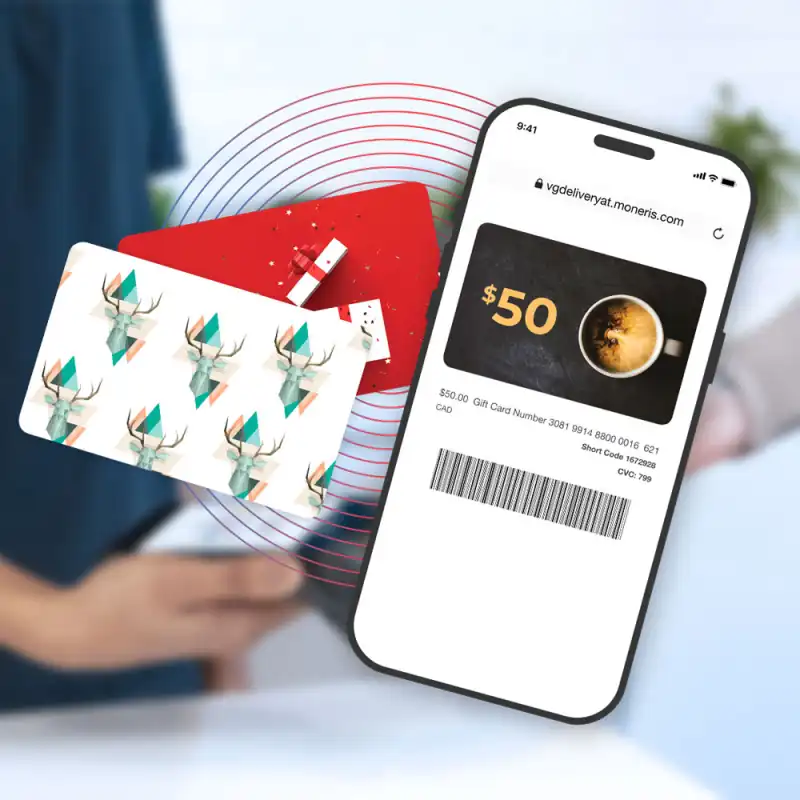
How gift cards make money
For a Canadian small-business owner, a gift card program is four things working together, and they stack. Upfront cash arrives when the giver pays, before you hand over the goods. New customers show up when the recipient visits, often for the first time, with the introduction already paid for. Uplift is the extra they add because the card covers part of the ticket and the rest feels like their own purchase. Breakage is the few dollars left unused, or the card that never comes back. Together those four cover more than a modest monthly fee. You are not discounting a visit you would have had.
The acquisition angle
Every gift card is a referral that arrives with money attached. The recipient is often someone who has never walked in, and they show up ready to buy rather than ready to be convinced. You were paid for that introduction when the giver bought the card. That is a different kind of acquisition from an ad you pay for and hope converts. At the counter, treat the redemption like a first visit you can see: ring the card, notice what they add, and give them a way to come back that is not a speech.
Running the numbers
The break-even on a small gift card program is low because the fee is a flat monthly cost and the sales are cash you collect up front. A modest run of cards in a week, plus the extra people spend beyond the balance, and the portion left unused, covers a $35 a month program with room past it. Everything above that fee is the sale itself and the new visitor. You do not need a crowded holiday to see it. A handful of cards, redeemed in the shop you already run, is the test. See the breakage effect for why the cash shows up before the goods do.
Getting started
Pick the format before you announce anything. Decide on digital, physical or both, then launch in a week so the closer can sell and redeem before the month's fee feels abstract. Enable the digital card first if plastic is still at the printer. Put a physical card where the line can see it once it arrives. Armour Payments programs start at $35 a month. See pricing for that fee, or book a demo if you want setup to include the sentence staff will actually say. A program that is live only in a dashboard is not started.
A first-time recipient who spends past the card
Someone walks in with a card they did not buy and treats the balance like a starting point, not a ceiling. Another customer paid you to make the introduction. At the counter the recipient adds something else, because the card covers part of the visit and the rest feels like their own choice. That extra is spend uplift, next to the cash you collected when the card was sold. A few dollars left unused is breakage, covered in the breakage effect. A modest run of cards in a week, plus that extra spend, is what makes a $35 a month program pay for itself. Offer digital and physical cards so the giver can choose the format. Either card should still redeem at the same till. The fee is on pricing. The return is the visit.
Hiding the cards under the counter
A program that exists only in the back office will not pay for a $35 month. Turning gift cards on and leaving the stack in a drawer, with no website link and no sentence for the closer, is the miss. Customers do not ask for a product they cannot see. Put physical cards at the till for the in-store gift. Put digital cards one tap from checkout for the person sending a gift from home. Tell staff the plain version: cash now, a new visitor later, a ticket that often runs past the balance, and a leftover that may never be spent. Read how to launch in one week and put the display out before you judge results. Book a demo if you want setup to include the selling step.