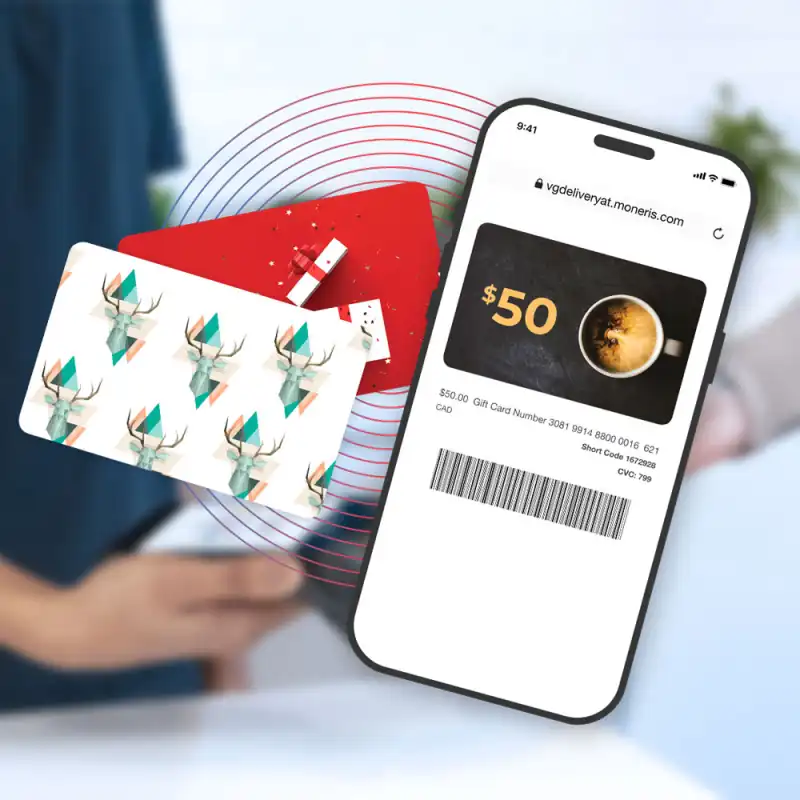
Where physical cards win
A physical card is something a customer can wrap, drop in a bag, or pick up while they are already paying. That is the in-store gift and the impulse add-on at the counter. Put the rack where the line can see it, especially in the weeks people are buying presents, and the card sells without a long explanation. Staff still need one sentence, but the object does the pointing. The trade-off is printing and a stack you have to keep in stock. A card in the back office does not win this sale. Plastic wins when someone wants a thing to hand over, not a link. Canadian retail owners still want that wrapped card at the counter, because digital vs physical gift cards cover different moments.
Where digital cards win
An eGift card is for the person who is not in the store. They buy online, or they buy after you have locked the door, and they send it by email or text with no shipping and nothing to print. That is the last-minute gift, including the holiday buyer on the final days, when promising plastic in the mail would be a lie. Digital cards do not sit in a stockroom, so you are not guessing how many to order. They cost nothing to produce beyond the program itself. They lose when the giver wants something to wrap. They win when speed is the whole purchase.
Why offer both
Plastic and digital cards are different occasions, not two versions of the same errand. The person at the counter wants a card in a bag. The person on the couch after close wants a card in an inbox. Offering only one format drops the other sale. A single program should track both balances the same way, so a wrapped card and an email gift redeem on the next visit without anyone guessing which login is live. Staff should be able to name both formats in one sentence. If "both" means two systems, the guest will feel it when the till cannot see the card they were given.
Set it up
Run digital and physical cards on one platform so a balance sold at the rack and a balance sold online redeem in the same place. Test one of each on the till before a busy weekend, including a card that was sent by email and a card that was handed over the counter. See gift cards 101 for why the sale is worth taking in the format the giver wants. See pricing for the program cost, or book a demo and redeem both formats on one ticket. If the email gift needs a different login from the plastic, you have two products that share a word.
The wrapped card versus the midnight text
One customer wants something to put in a bag. Another is buying from the couch after the shop has closed. Picking only one format drops one of those sales. A physical card at the counter is the wrapped gift and the impulse add-on while someone is already paying. A digital card is the midnight send, by email or text, with nothing to print and no shipping cutoff. The holiday playbook pushes eGift cards in the last days and the rack earlier in the season for that reason. Digital cards do not sit in a stockroom. Physical cards do, and they get picked up by someone who would never have ordered online. Keep both balances on one program so either format redeems the same way. Gift cards 101 is why the sale is worth taking in the format the giver wants.
The rack and the website selling the same balance
A physical card bought at the counter and an eGift bought online should redeem on the next visit without a clerk guessing which system is live. That handoff breaks when "both" means two programs. The guest hands over plastic and the balance sits on a portal the till cannot see. Or the email gift works online and fails in the store. One balance file fixes it. Sell the rack and the digital card from the same account. Redeem either at retail POS or online. Train the closer to name both formats in one sentence, and test each before a holiday weekend. See gift cards 101 for the offer, then book a demo and redeem one of each on the same till. If the email gift needs a different login, you have two products that share a word, not one program.