Goal, deadline, progress
Canadian charity and nonprofit directors and fundraisers run donation campaigns around one goal and one deadline donors can see at the door and on the page. Campaigns work because they create urgency around a finish line people can see. A specific goal, a deadline, and a visible progress bar give donors a target, and they give when the bar shows the drive is still short. Vague, open-ended asks rarely convert, because nothing tells the donor why today is the day. Put the number and the date on the page and on the kiosk in the same words staff will say at the door. Decide what the bar does when the date passes, and tell donors that in plain language. A goal nobody can repeat without opening a second document is not ready to publish.
Use matching and milestones
A matching gift, such as every dollar doubled until a stated Friday, is one of the strongest motivators in fundraising because the donor can see the gift grow and can see the clock. Only announce a match you have already secured. Combine it with milestone updates, a note when the bar hits a point you planned, to re-engage supporters as the campaign builds. Send those updates from the same goal and the same deadline the kiosk shows. If the page says the drive is open-ended and the door script says Friday, people wait. The match works when every channel tells one story through the final hour.
Promote and follow up
Push the campaign across email, social, donation pages, and kiosks, with the same goal and the same end date on each. Then thank donors and report the result, including whether you hit the number. Follow-up turns campaign donors into recurring givers when the thank-you includes a link to the monthly option on the same page, not a new form. Do this the next morning, while the gift is still on the donor record. A campaign that ends in silence teaches people their money disappeared into a total. See the channel map on donations.
Matching Friday at the theatre door
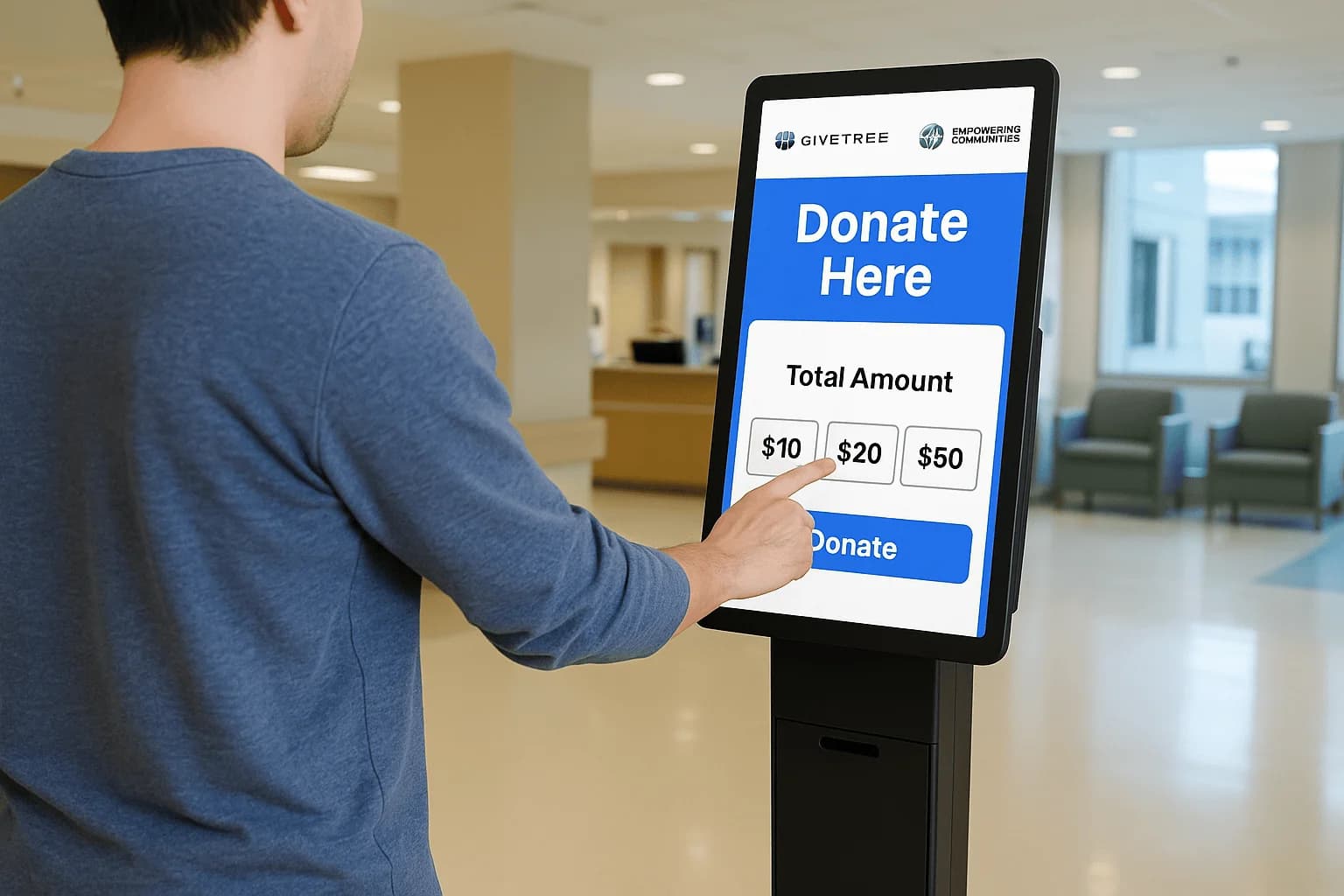
A community theatre put a kiosk at the door on a Friday when gifts were matched until close. Ushers said the deadline as people left. The bar on the donation page moved the same evening, so a donor who gave at the desk could see it on the way home. The match only works if the deadline and the bar tell the same story.
When the page said the drive was open-ended and the kiosk said Friday, people waited. After Friday the team emailed the result and invited monthly gifts. That is how a short campaign feeds recurring giving. Do not announce a match you have not secured. The public goal should be a number and a date that staff can repeat without checking a second document.
Opening night is a bad time to find three deadlines
Opening night is a bad time to discover that the page, the kiosk, and the usher script name three different deadlines. Before you publish, sit with the person who will answer donor questions. Write the goal as a number and a date, and put both on the page and on the kiosk. Decide what happens when the date passes: the bar stops, or you explain a stretch in plain language.
Name the matcher only if the match is real. Give one test gift and confirm the bar moves. Plan the thank-you for the next morning, with a link to monthly giving. Read the live page on a phone in the lobby, not only at a desk. When those checks pass, share it from donations and from the door itself.