Payment links: zero code, instant
A Canadian market stall comparing payment links vs hosted checkout can take online payments from a URL, with no website to build. A payment link is a secure URL tied to an amount or a product. Send it by email, text, invoice, or social message, and the customer pays in a couple of taps on their phone. No website or developer is required. That fits service businesses and one-off sales. Put the amount and a description the buyer will recognize on the page, using the same words you already told them. A wholesale reorder that never touches the cart is a link. A market stall can print the same URL as a code. The sale starts when the buyer can see what they are paying for.
Hosted checkout: secure and low-effort
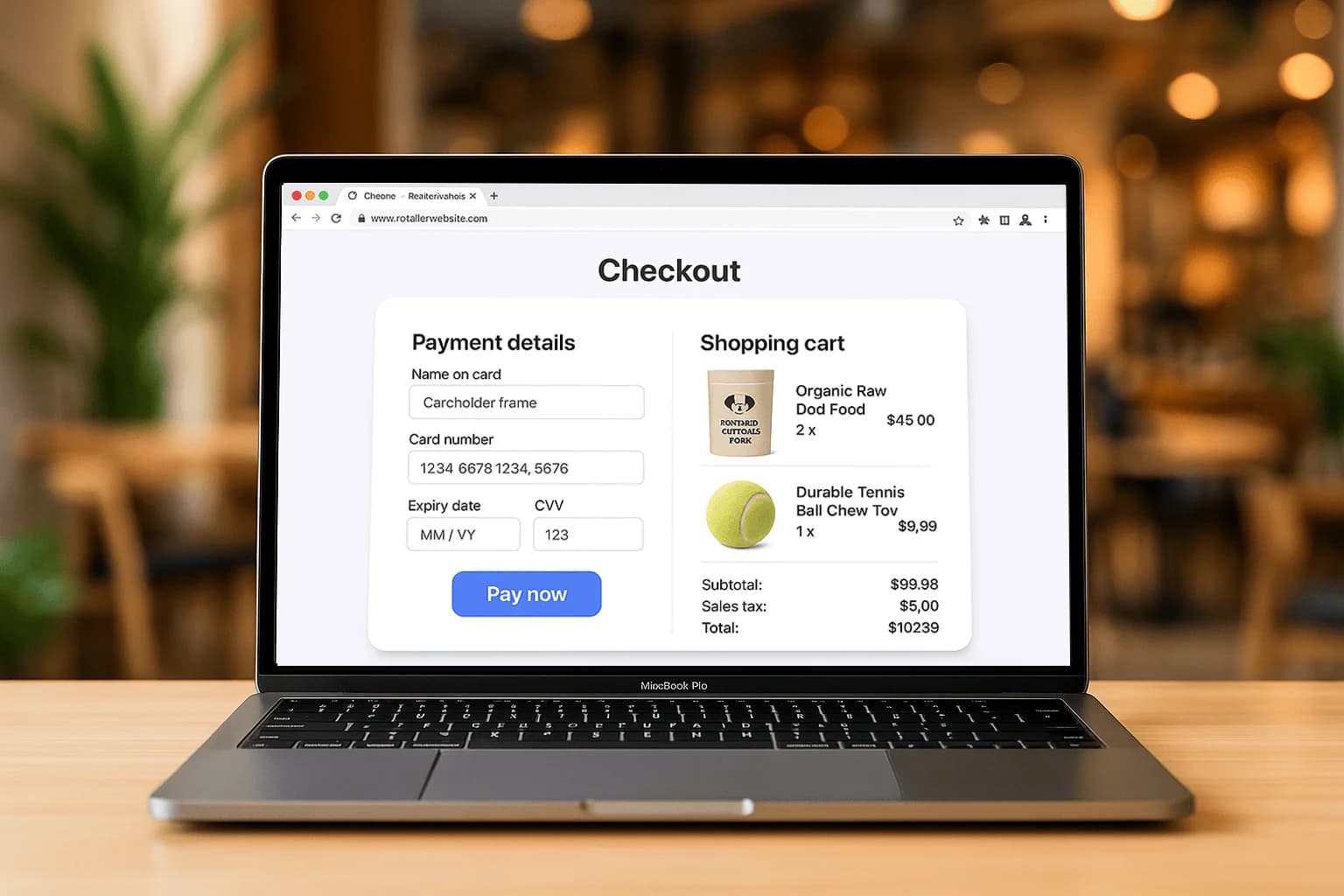
Hosted checkout puts a ready-made payment page on your site. Card entry happens on the provider's secure page, which keeps your PCI scope small while the step still feels like part of your store. It is the practical fit for most ecommerce sites that already keep products, tax, and shipping in a platform such as Shopify. You skip rebuilding that cart in a custom form, and refunds can stay tied to the order. Shoppers still need the full price, including shipping, before the last click. Use hosted checkout when the buyer is already on your site with a cart. Keep a payment link for invoices that never enter that cart.
Gateway API: full control
A gateway API lets developers build a fully custom checkout and handle the card data flow themselves. It offers the most flexibility and the most responsibility, including a larger PCI burden, because the card path sits closer to systems you operate. Choose it only when you truly need a bespoke experience and someone on your team will maintain it. A store already running on Shopify, WooCommerce, or Magento usually wants hosted checkout, so tax and shipping stay put. If a buyer is waiting in email while a developer asks for the API, send a link or a hosted page today and leave the custom build for a quieter week.
Which should you choose?
Need to get paid today, with no site: payment links. Running a store and you want low effort and low PCI: hosted checkout. Custom product, with in-house developers who will own the card flow: API. All three are available with Armour Payments. The path for this afternoon can differ from the path you want next quarter. Someone waiting in an inbox gets a link for the exact amount you agreed. A live cart goes through hosted checkout so the total cannot drift. See online payments or contact sales when the lasting setup is the open question.
A Shopify store that did not need a custom API
The Shopify store already had products, tax, and shipping, and a custom API checkout would have rebuilt all three. It also would have widened PCI scope, because card data would have moved through a build you own. Hosted checkout on the platform integration kept the card fields off the store server and still sat inside the shop. Payment links stayed in use for wholesale reorders that never touch the cart, where you type an amount and send a URL. The API stayed unused, which was the right outcome for this store. If the catalog already lives in Shopify, WooCommerce, Magento, or BigCommerce, start with connecting a payment gateway. Use a link when there is no cart. The three options are on online payments.
Choosing on a Tuesday when someone is waiting to pay
Someone is waiting in your inbox to pay, and the only page you have is email. Create a payment link for that amount and send it today. A hosted page can wait. If the buyer is already on your site with a cart, send them through hosted checkout so the amount cannot drift from the cart total you just showed them. If a developer is mid-build and asking for the API, ask whether hosted fields would ship this week with a smaller PCI load. The path you need this afternoon and the path you want next quarter can differ, and that is fine. Contact sales when the permanent path is the open question. The practical test is simple: where is the buyer standing at the moment you need the money.